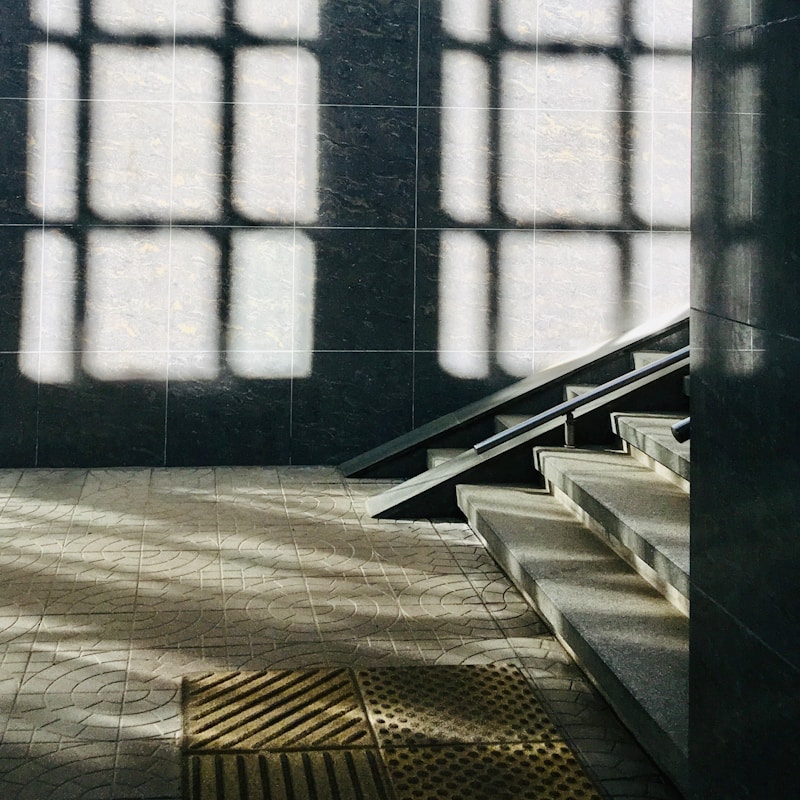
Why Good Spaces Leave Room to Breathe
Restraint is not the absence of ideas. It is the discipline of leaving enough space for a room to feel generous, useful, and alive.
Date
Time
6 min read
Category
Light & Space
A room can contain everything it needs and still feel crowded. The problem is not always the amount of furniture. More often, it is the lack of pauses between things — the narrow passage beside a chair, the crowded wall above a console, or the object that has nowhere to rest without interrupting the room around it.
Space is an active decision
Leaving an area open can feel unfinished when you are looking at a plan or a material board. Once the room is built, that same openness can become its most generous quality. It gives movement a natural path, lets light travel further, and allows a single object to be noticed without having to compete.
We think about empty space in practical terms first. How does someone enter the room? Where do they put down a bag? Can two people pass each other without turning sideways? These simple questions often reveal more than a long conversation about style. Comfort begins with the body.
Editing creates character
A restrained interior is not neutral. It can be warm, expressive, and deeply specific. The character comes from what remains after the unnecessary has been removed: a particular grain of timber, an old photograph, a chair with the right height, or a view that was given enough space to matter.
The hardest part is usually not finding beautiful things. It is deciding which beautiful things belong together. A room becomes coherent when each choice supports the next one, and when no single element asks to be the entire story.
Generosity is felt in the gaps
The best homes do not feel like collections of finished scenes. They feel like places where life can continue to happen. There is a surface for a book, a corner that catches the late sun, and enough room around the dining table for the conversation to stretch beyond the meal.
That kind of generosity is designed through proportion and patience. It comes from understanding that a room does not need to be filled to feel complete. Sometimes the most considered decision is the one that leaves something open.
Join Our Newsletter
Get occasional updates on new projects, design insights, and studio news, straight to your inbox, no clutter.
Date
Time
6 min read
Category
Light & Space
A room can contain everything it needs and still feel crowded. The problem is not always the amount of furniture. More often, it is the lack of pauses between things — the narrow passage beside a chair, the crowded wall above a console, or the object that has nowhere to rest without interrupting the room around it.
Space is an active decision
Leaving an area open can feel unfinished when you are looking at a plan or a material board. Once the room is built, that same openness can become its most generous quality. It gives movement a natural path, lets light travel further, and allows a single object to be noticed without having to compete.
We think about empty space in practical terms first. How does someone enter the room? Where do they put down a bag? Can two people pass each other without turning sideways? These simple questions often reveal more than a long conversation about style. Comfort begins with the body.
Editing creates character
A restrained interior is not neutral. It can be warm, expressive, and deeply specific. The character comes from what remains after the unnecessary has been removed: a particular grain of timber, an old photograph, a chair with the right height, or a view that was given enough space to matter.
The hardest part is usually not finding beautiful things. It is deciding which beautiful things belong together. A room becomes coherent when each choice supports the next one, and when no single element asks to be the entire story.
Generosity is felt in the gaps
The best homes do not feel like collections of finished scenes. They feel like places where life can continue to happen. There is a surface for a book, a corner that catches the late sun, and enough room around the dining table for the conversation to stretch beyond the meal.
That kind of generosity is designed through proportion and patience. It comes from understanding that a room does not need to be filled to feel complete. Sometimes the most considered decision is the one that leaves something open.
Join Our Newsletter
Get occasional updates on new projects, design insights, and studio news, straight to your inbox, no clutter.